What Is an Ideal Bite and How to Recognize It
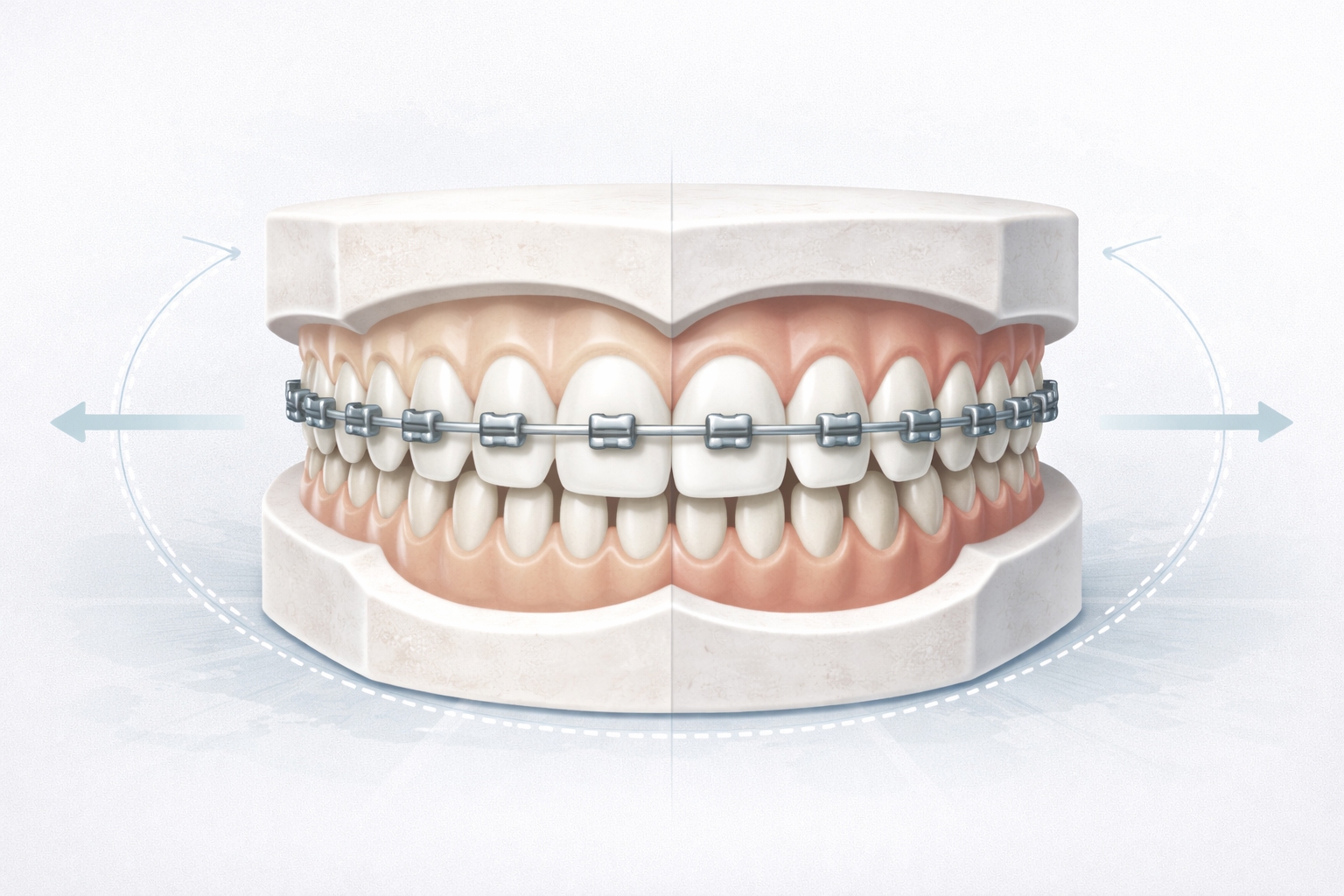
Does an Ideal Bite Really Exist?
Orthodontists often joke: "As many people, as many bites." Nevertheless, there are clear parameters by which correct — or even ideal — bite is determined.
Orthognathic Bite — The Gold Standard
This is the reference standard of correct bite, found in less than 5% of the population. Its characteristics:
- Upper teeth, when closed, contact the corresponding lower teeth without going beyond them;
- Upper teeth slightly cover lower teeth (not more than one third, i.e. approximately 2–3 mm), without tilting inward or outward;
- The facial midline passes between the two central upper and lower incisors;
- Absence of curvature, gaps and dental crowding.
People with an orthognathic bite generally have an ideal jaw structure and correct oval face.
Variants Considered Normal
Progenic — the lower jaw is slightly advanced forward. Considered a norm.
Biprognathic — similar to orthognathic, but with the dental arch slightly tilted forward.
Straight — upper teeth do not cover one third of the lower teeth, but contact them with incisal edges.
How to Check Your Bite
Accurate verification of occlusion requires a complete orthodontic examination. At Orto Clinic Chisinau, we perform detailed digital diagnostics and explain exactly what your situation is and what treatment options are available.