Orthodontic Diagnostic Methods
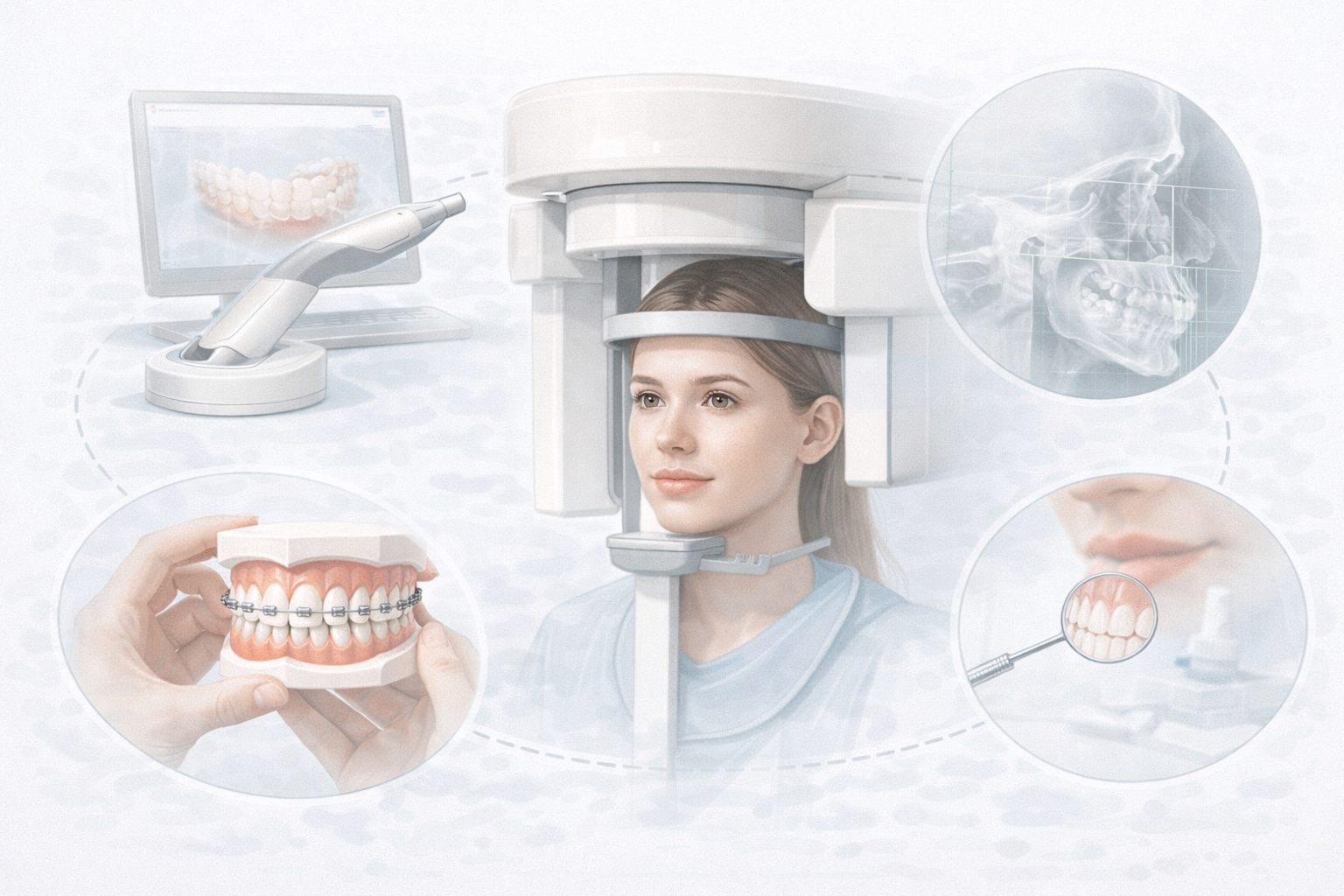
Why Diagnostics Are Important in Orthodontics
The key to successful orthodontic treatment is accurate and thorough diagnostics. The more information the doctor gathers at this stage, the better the optimal solution can be chosen.
Clinical Methods
Clinical methods include: anamnesis, oral cavity examination, palpation, percussion, probing, and auscultation. These methods do not require specialized equipment but are essential for determining further necessary investigations.
During anamnesis, the orthodontist collects information about: pregnancy history, type of feeding, illnesses, tooth eruption timing, breathing type, harmful habits (finger sucking, nail biting), and any previous orthodontic treatments.
Paraclinical Methods
After clinical examination, the orthodontist uses instrumental methods:
- Diagnostic jaw models
- Photographs of teeth and face
- Symmetroscopy of dental arches
- Cephalometry (teleradiography)
- Electromyometry
- X-ray examinations
- MRI of the temporomandibular joint
The combination of these methods allows precise identification of the location and extent of anomalies and selection of treatment tactics. At Orto Clinic Chisinau, we use modern digital diagnostics for precise treatment planning.