Consequences of Mouth Breathing
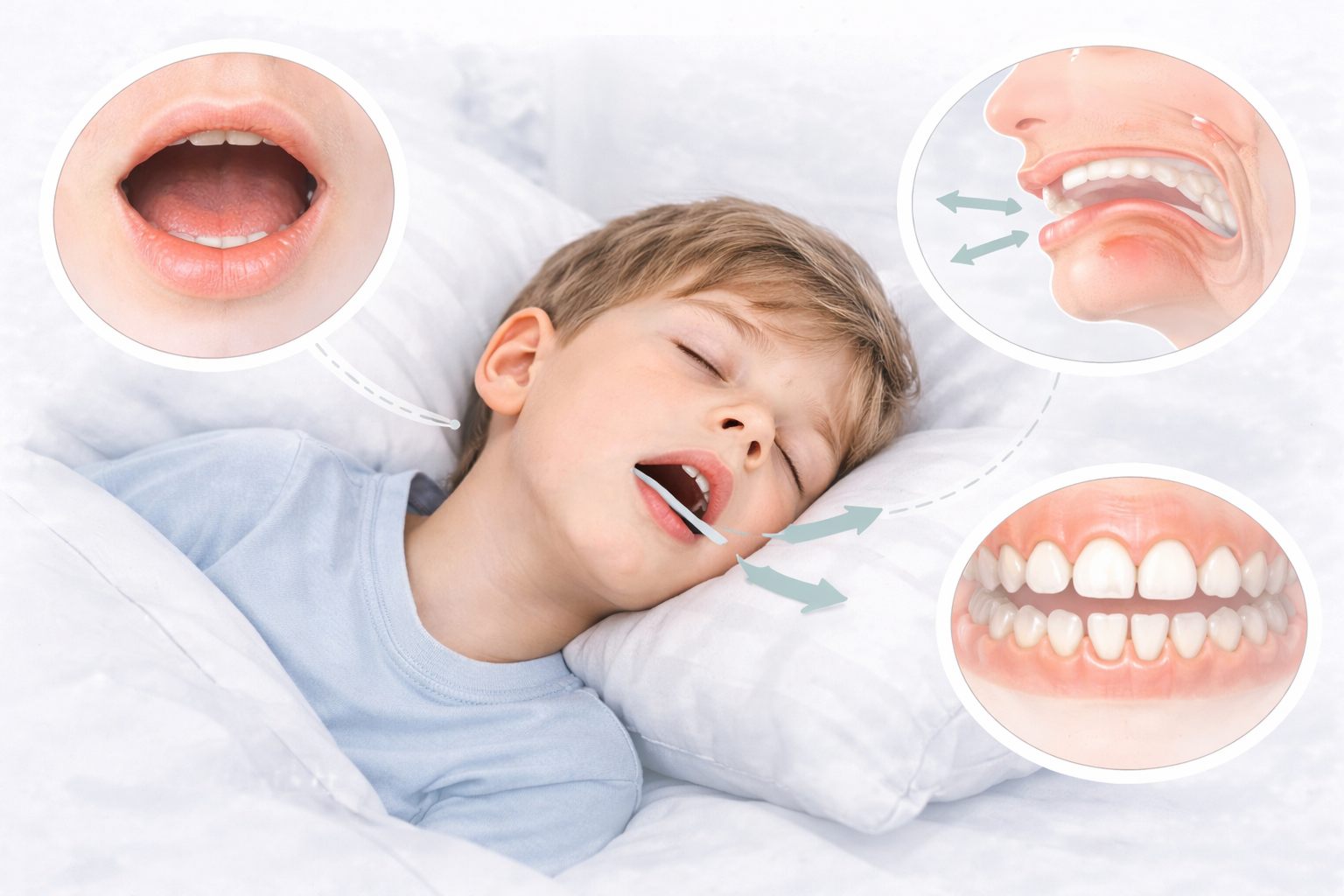
Breathing is an unconscious process. As a rule, people inhale and exhale through the nose while keeping the mouth closed. Sometimes, for example during weightlifting or running, a person starts breathing through the mouth. If mouth breathing becomes постоянной habitual, it can lead to problems. Mouth breathing is especially dangerous in children, as it may affect the proper development of the jaw bones.
°Causes of mouth breathing
Most often, the cause of mouth breathing is the inability to breathe through the nose (obstruction of the nasal airways). This situation may be caused by the following:
— respiratory infections (cold, flu)
— enlarged tonsils and adenoids
— allergies
— deviated nasal septum
°Signs of nasal airway obstruction may include:
— dark circles under the eyes
— snoring, apnea
— frequent upper respiratory tract infections
— a feeling of constant nasal congestion during the day and/or at night
°Effects on teeth, jaws, and posture
If left untreated, mouth breathing can lead to health problems, particularly dental ones. When a person breathes through the mouth, the amount of saliva in the mouth decreases, which in turn increases the risk of tooth decay and/or gum inflammation. In addition, mouth breathing can lead to changes in the growth of the jaw bones and facial skeleton.
Normally, when a person is relaxed, the tongue rests against the palate, thereby compensating for the external pressure exerted by the cheek muscles. In mouth breathing, the tongue is positioned lower, at the bottom of the oral cavity. This leads to narrowing of the upper jaw and elongation of the lower jaw, and as a result the child may develop an elongated “long face.” Due to narrowing of the jaw, dental crowding and bite problems may appear.
Breathing through the mouth can also lead to posture disorders. As a rule, people who breathe through the mouth tend to move their head forward. This posture makes breathing easier, but it leads to problems in the cervical spine.
°Treatment
Correction of mouth breathing should primarily be aimed at eliminating the causes of this condition. This requires a multidisciplinary approach (dentist, ENT specialist, osteopath, and if necessary several other doctors). Treatment may include surgical procedures, myofunctional correction, medication, and special exercises.
If mouth breathing is caused by ENT diseases, the otorhinolaryngologist will prescribe the necessary treatment. In serious cases, surgical correction may be required (adenoid overgrowth, enlarged tonsils).
Sometimes, even after the airway obstruction has been removed, mouth breathing remains because it has already become a habit. In such cases, myofunctional therapy is prescribed together with special exercises to normalize nasal breathing. As a rule, this work is carried out by an orthodontist.